
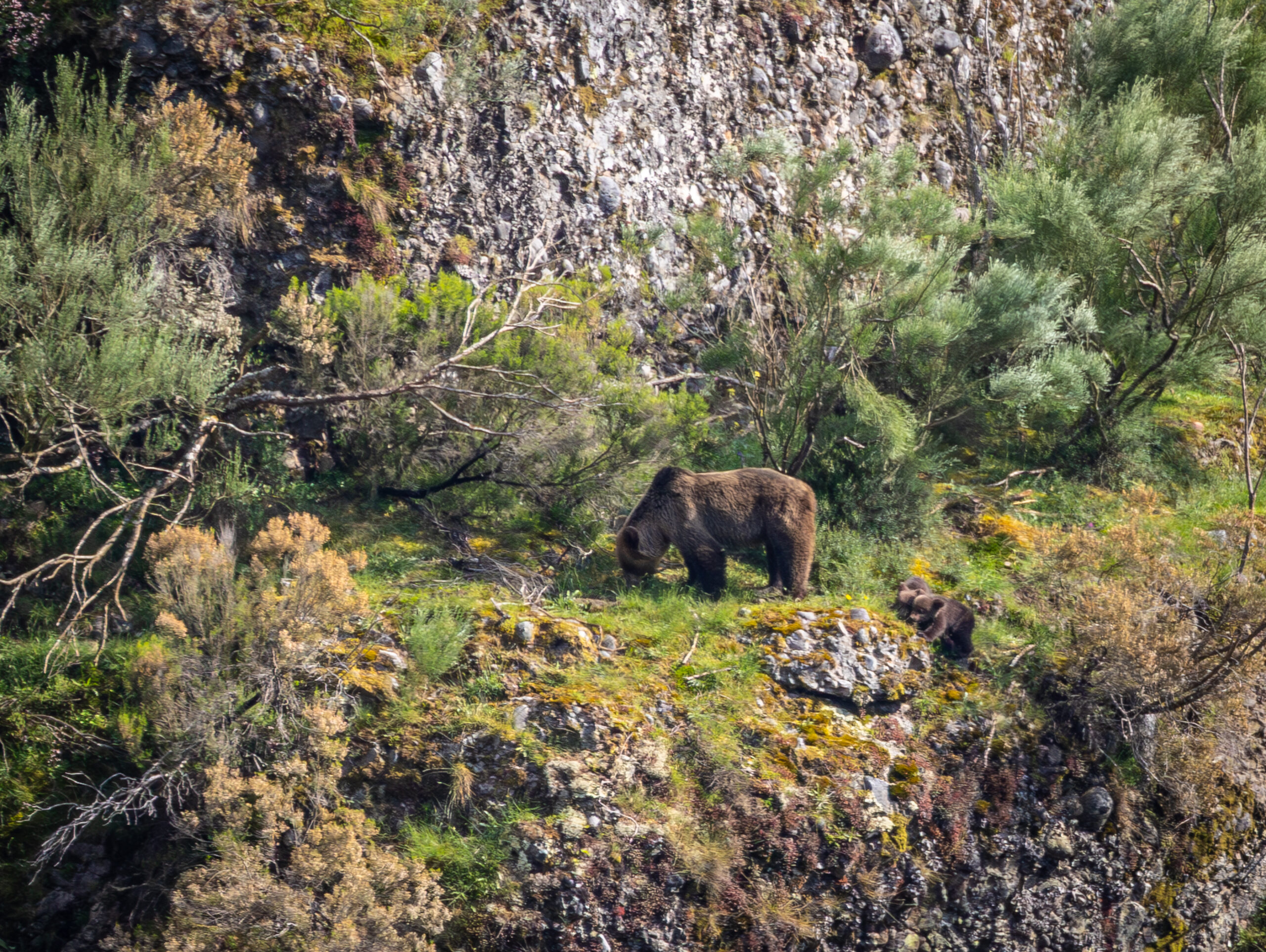
Choose Somiedo for the simplest first bear-watching trip in Asturias. Its observation points, interpretation centres and guided outings are concentrated around Pola de Somiedo, so it is easier to combine an early wildlife session with a walk through the park’s valleys. Choose Fuentes del Narcea, Degaña and Ibias when you want a larger, wilder area and are prepared to spend more time travelling between viewpoints and villages.
Neither park offers a guaranteed sighting. Cantabrian brown bears move freely through protected mountain habitat, and responsible observation happens from a distance. The trip works best when seeing a bear is the possibility that shapes the day, not the only outcome that can make it worthwhile.
Somiedo or Fuentes del Narcea?
The two parks suit different kinds of visit.
- Choose Somiedo for a compact first trip, established viewpoints and a useful base in Pola de Somiedo.
- Choose Fuentes del Narcea for a more dispersed wildlife journey through the south-west of Asturias, with Cangas del Narcea as the main gateway.
- Allow time for both only if you have several days. They are neighbouring bear territories on a regional map, but they should not be treated as two stops on a rushed afternoon drive.
Somiedo is arranged around five valleys and combines bear habitat with lakes, marked walking routes, traditional brañas and interpretation facilities. Fuentes del Narcea covers a much broader landscape of oak and beech forest across Cangas del Narcea, Degaña and Ibias. The latter rewards a slower road itinerary; Cangas del Narcea is about two hours by road from Oviedo before any local wildlife excursion begins.
When is the best time to watch bears in Asturias?
April and May generally offer the clearest spring opportunity. Bears are active after winter and may feed in more open meadows, while the breeding season also increases movement. Summer can still produce sightings, particularly around feeding areas, but heat pushes the useful observation periods towards the edges of the day.
Autumn is active for a different reason: bears are feeding before winter. The compromise is visibility, because they often use wooded ground where an animal can disappear quickly. Winter is the least favourable season for a trip built around seeing a wild bear.
Whatever the month, plan observation for dawn or dusk. Bring warm layers even when the daytime forecast looks mild; sitting still before sunrise in a mountain viewpoint feels very different from walking in the afternoon. Weather, vegetation and food availability all affect where bears move, so a date on the calendar never guarantees a result.
What responsible bear watching looks like
Responsible bear watching means seeing a distant animal through a telescope without changing its behaviour.
Stay at the established observation point, keep voices low and follow any local restrictions. Do not move closer for a photograph, follow tracks away from a permitted route or use food and sound to attract wildlife. Somiedo Natural Park explicitly prohibits disturbing fauna. Dogs must remain under effective control and normally on a lead.
Binoculars are the minimum useful equipment; a telescope makes a substantial difference on open slopes. A responsible session may last several hours and still end without a bear. Tracks, feeding signs, deer, raptors and the structure of the habitat are part of the experience rather than consolation prizes.
Spain’s environmental guidance asks wildlife watchers to understand both the rules of the protected area and the behaviour of the species. That makes distance, patience and access discipline practical requirements, not optional etiquette.
Where to base yourself in Somiedo
Pola de Somiedo is the practical base. It has the park’s reception and interpretation facilities and sits close to the valleys where most visitors begin exploring. Start there for current route information and any temporary restrictions before heading to an observation area.
Official tourism information highlights three established bear-watching points in Somiedo: Gúa, the Príncipe viewpoint at La Peral and La Pola. Their usefulness varies with the season and current animal movement. A named viewpoint is not a promise that a bear will be present when you arrive.
Somiedo also gives a non-wildlife day enough substance. The routes around Lago del Valle, the Saliencia lakes and the traditional brañas reveal the landscape that supports the animals. This matters when cloud, rain or dense vegetation makes observation difficult.
Two or three nights work better than a single pass through the park. Keep one dawn or dusk session fixed, then leave the rest of the schedule flexible enough to move a walk or interpretation-centre visit around the weather.
When Fuentes del Narcea is the better choice
Fuentes del Narcea suits travellers who want a broader nature trip rather than a compact wildlife break. The park extends across a large part of south-west Asturias, with extensive forest and several recognised observation areas. Official guidance points to locations around Degaña, Cangas del Narcea and Ibias, including the Fonduveigas viewpoint.
Use Cangas del Narcea as the organising base, then decide which part of the park deserves a full day. Trying to cover the whole region creates too much driving and too little patient observation.
Muniellos needs separate planning. The protected forest lies within the wider Fuentes del Narcea area, but entry requires official authorisation and is limited to 20 visitors a day. Treat it as a reserved forest visit, not as an improvised detour in pursuit of a bear.
Fuentes del Narcea becomes the stronger choice when remoteness, forest and a multi-day road journey are part of the appeal. Somiedo remains easier when bear watching is one element of a short Asturias itinerary.
Should you book a guide?
For a first attempt, a qualified local guide is the sensible choice. Guides know which observation points are appropriate on the day, provide or help with optical equipment and can interpret tracks, feeding signs and habitat without leading visitors into sensitive areas.
Guided sessions commonly begin at dawn or end at dusk. Confirm the meeting point, walking distance, included optics and cancellation policy before booking. Ask whether the outing is suitable for children or travellers with limited mobility; a long stationary watch and a guided walk place different demands on the group.
Independent observation can work from established public viewpoints if you already have suitable optics and understand the park rules. It should not become roaming beyond marked access in search of a closer encounter.
Plan for a good day without a sighting
A bear may remain behind woodland, move onto another slope or never appear. Build a day that still has value: one observation session, one landscape walk and one interpretive stop is a stronger plan than spending every daylight hour waiting at the same viewpoint.
Before setting out, check four things:
- The observation area and access route are open.
- The weather suits the planned walk and a long stationary watch.
- Everyone has warm layers, water and suitable footwear.
- The group accepts that wildlife, not the timetable, decides whether a sighting happens.
For a first visit, base yourself in Pola de Somiedo and book one guided dawn or dusk outing. Move on to Fuentes del Narcea when you have enough time to explore its wider territory without rushing. The better bear-watching trip is not the one that gets closest; it is the one that leaves the animal undisturbed and the traveller with a clearer understanding of the landscape it needs.

Hello! I’m Ben Fischer, a travel enthusiast who has journeyed far and wide to bring you unique and inspiring stories. Each destination is a new adventure for me, a chance to explore diverse cultures and share unforgettable experiences.
In my articles, I take you beyond mere descriptions of places. I share the encounters, special moments, and anecdotes that make each trip unique. My writing is an invitation to see the world through my eyes, blending practical tips with personal insights.
As a lifelong traveler, I approach each journey with respect and curiosity, eager to uncover the stories hidden in every corner of the globe.
