
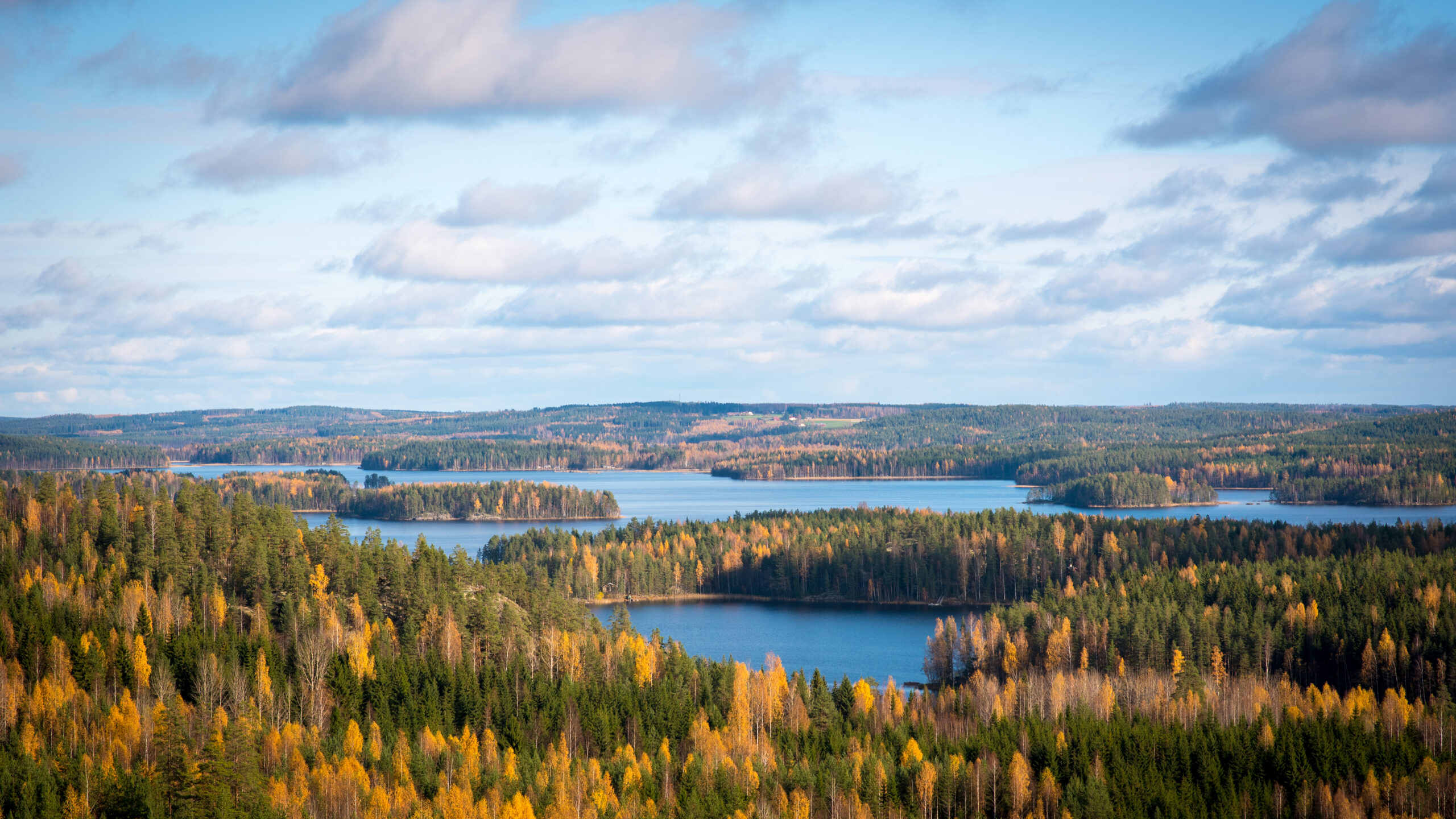
For the best chance of autumn colour around Lake Saimaa, plan for the second half of September and keep the final route flexible. Early September can still look decidedly green this far south; by late September, ruska usually has a better chance of reaching Finland’s lake district. There is no dependable peak-colour weekend, because warmth, rain and wind can shift the display or strip leaves quickly.
A first trip works best over three or four nights, with Savonlinna as the main base and Puumala as a separate stop. Lake Saimaa is too large and fragmented to treat as one neat circuit. Trying to drive around it wastes the quiet hours that make an autumn visit worthwhile.
When does ruska reach Lake Saimaa?
Ruska is the Finnish name for the autumn change from green to yellow, orange, red and brown. It begins in Lapland and moves south. Visit Finland places the average northern peak in the second week of September, while southern Finland more often reaches full colour towards the end of September or in early October.
Lake Saimaa lies in eastern Finland, between those broad northern and southern reference points. Late September is therefore the sensible planning window, not a guarantee. The same dates can produce bright colour one year and a mix of gold and green the next.
The choice of week depends on what matters most:
- Choose early to mid-September for milder conditions and a better chance of finding seasonal services still operating, accepting that much of the forest may remain green.
- Choose late September if autumn colour is the priority and you are comfortable with cooler mornings, shorter days and reduced timetables.
- Consider early October for a quieter trip and possible colour farther south, but expect a greater risk of bare trees, cold rain and closed seasonal activities.
The Finnish Meteorological Institute defines autumn by a daily mean temperature below 10°C. Across Finland, that threshold arrives weeks earlier in the north than in the south, and the first snow can fall in northern areas during September. Around Saimaa, the practical lesson is simple: pack for a cool, wet change even if the forecast looks mild when you book.
How many days do you need around Lake Saimaa?
Allow three nights for a focused first look or four if you want time for a national park outing. Use one main base rather than changing hotel every evening.
Savonlinna is the most useful starting point for a short trip. The city sits among the waterways of Saimaa, with Olavinlinna Castle providing a clear wet-weather or low-light alternative to a day outdoors. From this base, you can choose one full nature day rather than collecting distant stops.
Puumala deserves its own day or overnight stay. Its appeal is the road-and-water landscape: islands, bridges, eskers, viewpoints and short walks close to the lake. Moving once between Savonlinna and Puumala gives the trip variety without turning it into a race around Finland’s largest lake.
If this is part of a longer holiday, connect it to one or two carefully chosen European road trip routes rather than adding another full circuit around Saimaa.
A practical three-day autumn plan
Day one: settle in Savonlinna
Keep the arrival day compact. Explore central Savonlinna and Olavinlinna, then use the remaining daylight for the waterfront. This gives you a worthwhile day even if rain makes a forest walk unappealing.
Book two nights here if you want a nature excursion. Linnansaari and Kolovesi national parks protect some of the lake’s most distinctive landscapes, but boats, guided trips and visitor services can become limited outside summer. Confirm the exact service you need for your date before building the day around it.
Day two: choose one nature outing
Do not try to combine both national parks in a single day. Pick the outing with the clearest access and weather window, or keep the car day land-based if wind and rain make time on the water unattractive.
This is where a flexible plan pays off. A forecast that is poor for a boat trip may still suit a short forest walk, a scenic drive or more time in Savonlinna. Autumn colour also varies locally, so a modest change of direction can be more useful than chasing a supposed national peak date.
Day three: move towards Puumala
Treat Puumala as a scenic stop rather than the gateway to a complete driving loop. Allow time for lake views, a short trail and the local road landscape. If the weather clears late, resist adding another distant town: low autumn light over the water is a better reason to stop than a checklist is to continue.
Travellers often encounter the 60-kilometre Puumala Archipelago Route while researching this area. It is a cycling route that relies on the Norppa II bike ferry. The ferry accepts bicycles and motorcycles, but not cars. In 2026 it runs daily only until 30 August and then on Saturdays from 5 to 26 September. Drivers cannot use it as a through-route, and cyclists need to check the current timetable and book the crossing rather than assume a daily autumn service.
Should you drive or cycle?
A car is the practical choice for a first three- or four-night visit, especially when the weather is changeable. It gives you room for waterproof clothing, lets you switch between indoor and outdoor plans, and makes separate Savonlinna and Puumala stops straightforward.
Cycling offers a closer experience of the islands and shores, but it requires more precise planning in autumn. Ferry days, daylight, wind and rain matter more than they do on a summer ride. The Puumala route can be completed in a day by a strong cyclist, yet the local tourist office recommends dividing it into sections to make time for the landscape. For an autumn holiday, that slower approach is the more convincing one.
Whichever mode you choose, check Fintraffic shortly before setting out. Its Traffic Situation service shows road works, disruptions, driving conditions, forecasts and road-camera images. The service also warns that observations can be incomplete or differ from conditions on the ground, so use it as a current planning aid rather than a promise.
What should you book before the drive?
Accommodation is the first decision. Choose a base with dinner available on the nights you are staying; a lakeside property that works perfectly in July may offer fewer services after the summer season.
Then verify the one activity that would materially change the trip. That could be a boat transfer, a guided national park excursion, a cycle ferry or a castle visit. Do not build several days around unconfirmed summer timetables.
Pack so that a cold, wet morning does not cancel the whole plan. Layers, a waterproof jacket and shoes suitable for damp paths matter more than a rigid outfit for the forecast temperature. Keep a dry indoor option for each base and avoid leaving the only important walk until the final morning.
Is an autumn Lake Saimaa road trip worth it?
Yes, if you value quiet roads, changing forest colour and a trip that can adapt to the weather. Late September gives the best balance for travellers whose main aim is ruska. Early September is the safer choice for seasonal services, but it comes with a real chance of green trees. Early October suits flexible travellers who accept shorter days and a greater risk that wind has already taken the leaves.
Plan three or four nights, sleep mainly in Savonlinna, give Puumala its own stop and confirm any ferry or boat before departure. The successful version of this drive is not the one that covers the most shoreline. It is the one that leaves enough time to change course when the colour, weather and light tell you to.
Hello! I’m Ben Fischer, a travel enthusiast who has journeyed far and wide to bring you unique and inspiring stories. Each destination is a new adventure for me, a chance to explore diverse cultures and share unforgettable experiences.
In my articles, I take you beyond mere descriptions of places. I share the encounters, special moments, and anecdotes that make each trip unique. My writing is an invitation to see the world through my eyes, blending practical tips with personal insights.
As a lifelong traveler, I approach each journey with respect and curiosity, eager to uncover the stories hidden in every corner of the globe.
