
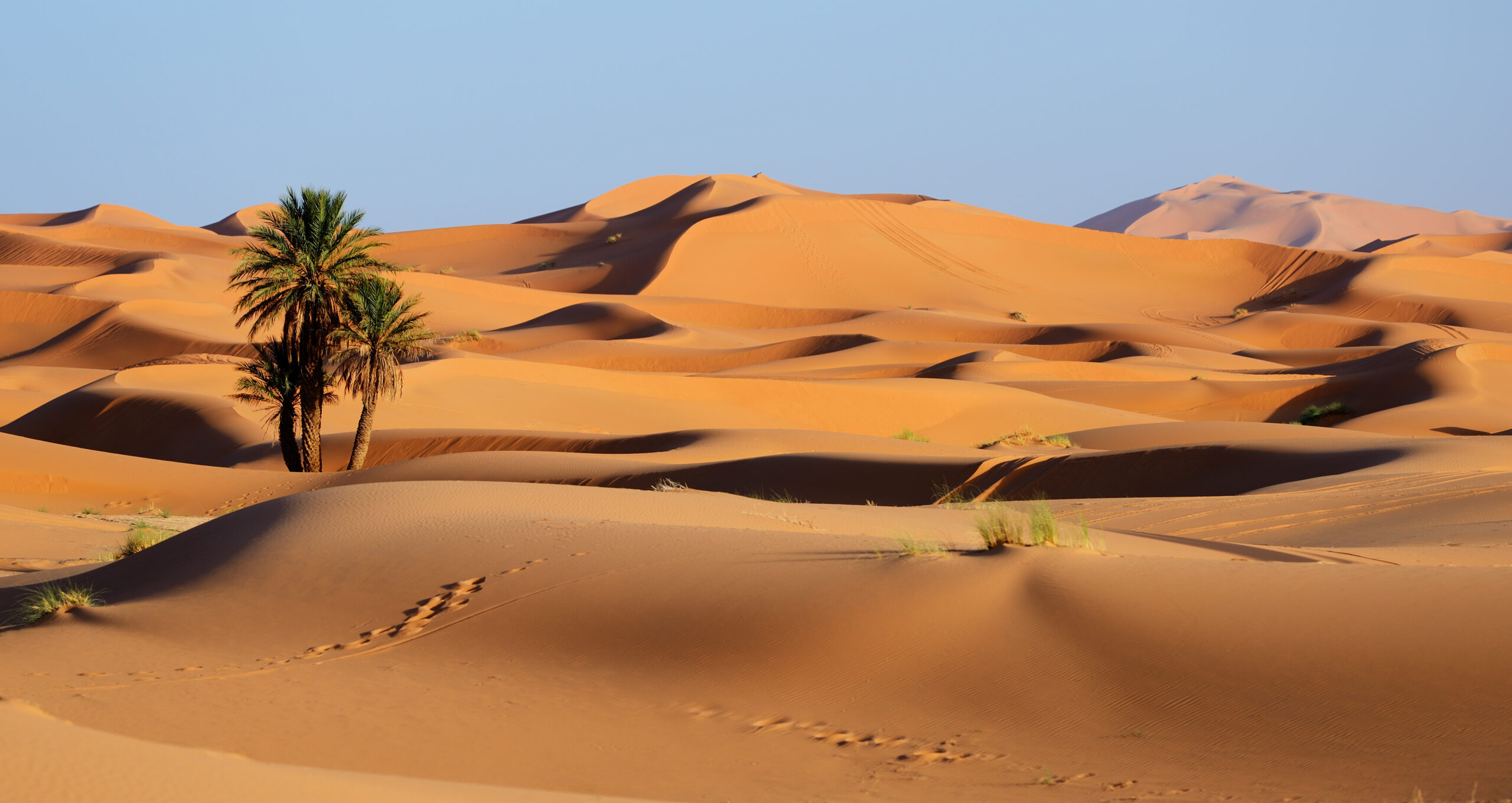
If you’re planning a trip to the Sahara—be it in Morocco, Tunisia, or the South of Algeria—now is the ideal time to go. The most favourable period for a visit runs from October to mid-April, when daytime temperatures are bearable. However, this doesn’t stop the nights from remaining bitterly cold!
A Paradox for Many Visitors
It might seem baffling. When you’re in the Sahara, or indeed any desert area around the globe, you can be sweltering during the day, only for the exact opposite to happen once night falls. Temperatures plummet to freezing levels, potentially reaching as low as 10°F in the Sahara’s case! That’s a huge variation of several dozen degrees compared to the daytime high. But why is this?
Low Humidity and Lack of Cloud Cover
These extreme temperature swings between day and night in the Sahara and similar locations are primarily explained by the unique characteristics of desert environments themselves.
First, the nature of the soil plays an essential role. Desert ground is mostly composed of sand and rocks, two materials that absorb heat rapidly during the day and release it just as quickly at night. Both have a low heat capacity, meaning they warm up and cool down very fast.
Next is the absence of vegetation. Plant life traditionally plays an important role in regulating temperatures by retaining moisture and creating shade, which helps to mitigate temperature variations. Consequently, with little or no vegetation, deserts are naturally more susceptible to thermal extremes.
Another factor is low humidity. The dry air in arid environments does not retain heat well. The warmth absorbed by the ground during the day quickly dissipates into the atmosphere as soon as darkness descends.
Finally, there is the characteristic lack of cloud cover and constant sunshine common to deserts. The sun directly heats the ground during the day, causing a rapid temperature spike. At night, with no clouds to trap the heat, the ground cools down very rapidly, contributing to the drastic drop in temperature.

What to Pack for a Bivouac Night
It’s an unmissable experience when undertaking a multi-day camel trek (méharée) or desert hike: spending at least one night sleeping under the stars or in a tent. It’s a fantastic experience and one for the memory books… provided you’ve prepared for the temperature difference you’ll face.
To combat the intense nocturnal cold, you’ll be well-advised to bring appropriate gear for a good night’s sleep. This should include: a warm hat (beanie), gloves, thick wool socks (or you can double up with two less warm pairs), a jogging bottoms or pyjama trousers for the night, possibly worn over thick thermal tights or leggings, plus a fleece jacket for your top half.
One final, crucial piece of advice to avoid getting cold when you settle down for the night: as the temperature starts to drop, do not keep on your daytime clothes in which you’ve sweated. Since these clothes would rapidly cool your body as the temperature drops, it is absolutely essential to change them. This is a tip you definitely shouldn’t forget.

Hello! I’m Ben Fischer, a travel enthusiast who has journeyed far and wide to bring you unique and inspiring stories. Each destination is a new adventure for me, a chance to explore diverse cultures and share unforgettable experiences.
In my articles, I take you beyond mere descriptions of places. I share the encounters, special moments, and anecdotes that make each trip unique. My writing is an invitation to see the world through my eyes, blending practical tips with personal insights.
As a lifelong traveler, I approach each journey with respect and curiosity, eager to uncover the stories hidden in every corner of the globe.
