
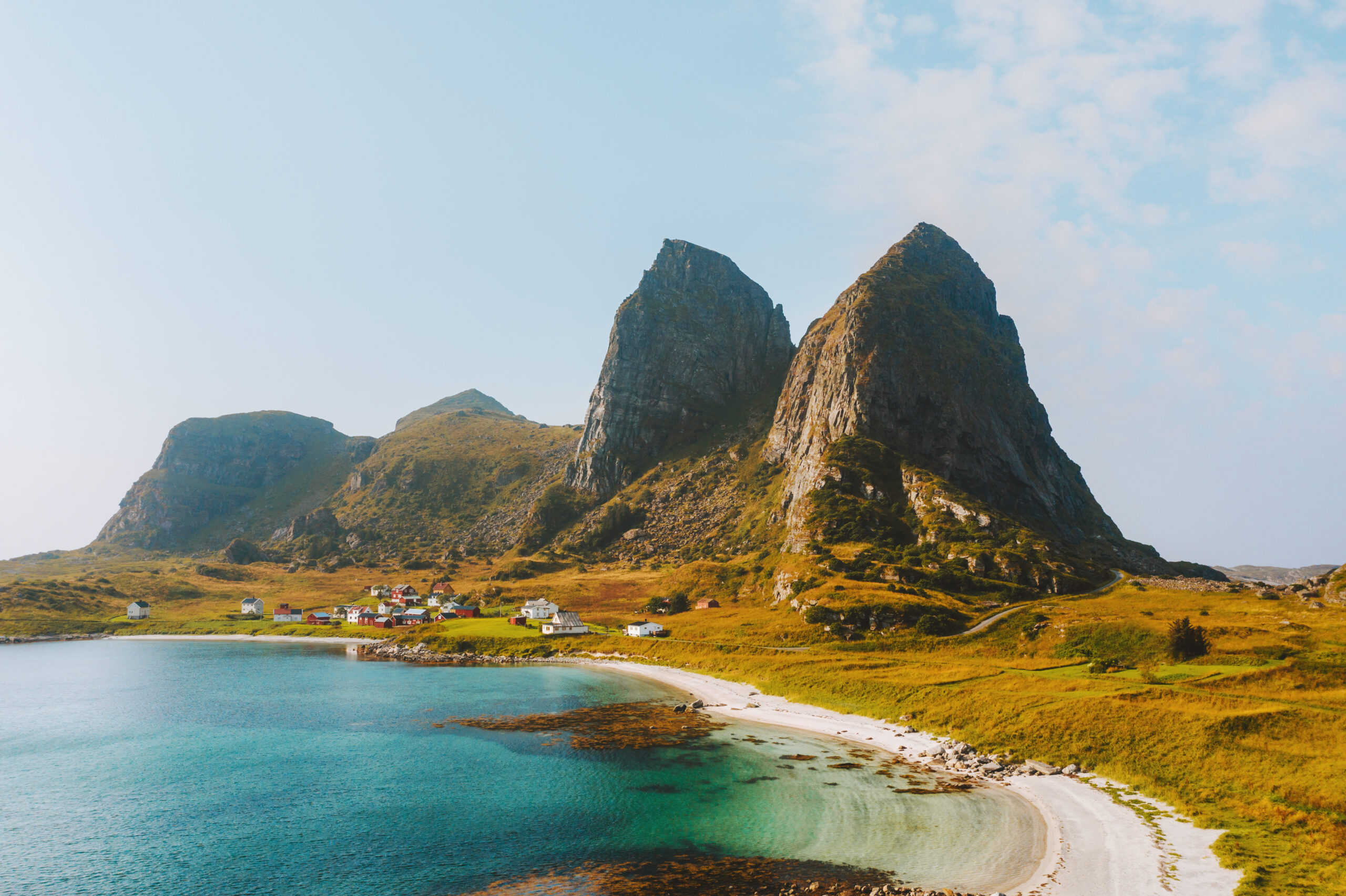
Støtt is a small island group off the northern Helgeland coast. You can reach it by passenger boat from Bodø or Ørnes, then explore much of the island on foot. The difficult part is not getting around once you arrive; it is fitting the outward and return sailings around the visit you want. Check both boats before committing to a room or a day trip.
The old trading post gives Støtt a natural base. It once sheltered fishermen waiting for conditions to improve before the crossing towards Lofoten. Today its historic buildings house accommodation and a restaurant. Beaches and short walks make time on the island appealing even without a booked excursion.
Which boat should you take?
The Nordland Express and local passenger boats connect Støtt with Bodø, Ørnes and other stops along the coast. Bodø makes sense if you are arriving by air or travelling without a car. Ørnes may suit a wider Helgeland itinerary. Treat those as route choices, not a promise that either port will have a convenient departure on your date.
Use the current Reis Nordland journey planner for the outward and return sailings. Some published times on accommodation and tourism pages refer to older summer seasons; do not build a September trip around them. If the last suitable return boat leaves too early for the walk or meal you have in mind, stay overnight or choose another date.
Reis Nordland says that buying a ticket for a specific express-boat departure in its Reis app reserves a place. It also offers booking through Entur. A ticket bought on board depends on spare capacity, so booking ahead is the safer choice for a trip tied to a room reservation. Arrive at the quay at least 15 minutes before departure, as the operator requires for a reserved place. Check its latest advice on any request-only stops when you book.
Is Støtt worth an overnight stay?
A day visit works if the boat timings leave enough hours ashore and you mainly want to walk, eat and see the old trading post. Støtt is largely car-free, and Visit Norway describes its beaches and walking possibilities. Keep the plan small: a walk and a meal are easier to enjoy than an itinerary that depends on several activities running to time.
Stay overnight if the boat timetable leaves only a narrow afternoon, or if you want a slower visit with a kayak outing or another guided activity. The former trading post is the obvious place to check for rooms and dining; confirm its availability and seasonal opening directly before buying transport. Ask an activity provider about weather limits and the meeting point rather than assuming that an excursion runs every day.
The trading post’s history is part of the reason to stay. Its operator traces the Sørensen family’s stewardship to 1897, but the island’s role as a shelter and supply stop for fishermen is older. A night here offers time to notice that maritime setting without turning the visit into a race for the next boat.
Make the bookings in the right order
First choose a date and check the two boat journeys. Then confirm the room, meal or activity you care about, and reserve the sailings that make the plan possible. Recheck the operator’s timetable shortly before travel: coastal services can change with season and conditions. If a same-day return leaves little margin, an overnight stay is the more workable choice.

Hello! I’m Ben Fischer, a travel enthusiast who has journeyed far and wide to bring you unique and inspiring stories. Each destination is a new adventure for me, a chance to explore diverse cultures and share unforgettable experiences.
In my articles, I take you beyond mere descriptions of places. I share the encounters, special moments, and anecdotes that make each trip unique. My writing is an invitation to see the world through my eyes, blending practical tips with personal insights.
As a lifelong traveler, I approach each journey with respect and curiosity, eager to uncover the stories hidden in every corner of the globe.
