
There are certain buzzwords that crop up regularly, yet we often don’t know—or have simply forgotten—what they actually mean. Today, we’re looking at a term that is set to redefine air travel: the Smart Airport. This new breed of terminal is likely to become the standard for all of us within just a few years.
The airport of tomorrow
Put simply, a smart airport is one that harnesses cutting-edge technology—starting with Artificial Intelligence and biometrics—to make the journey smoother, safer, and more efficient. The ultimate goal is to transform a place often perceived as stressful into a connected, automated experience, reducing the hassle for passengers and cutting down those long waits before takeoff.
To achieve this, changes are happening at every level. The primary focus is on reducing, if not entirely eliminating, the endless queues that most travellers consider the biggest headache of flying.
Consequently, automated kiosks, gates, and biometric systems are being rolled out so that your face effectively becomes your passport. Facial recognition is used for check-in, bag drop, and boarding, verifying your identity instantly and making manual paper document checks a thing of the past.
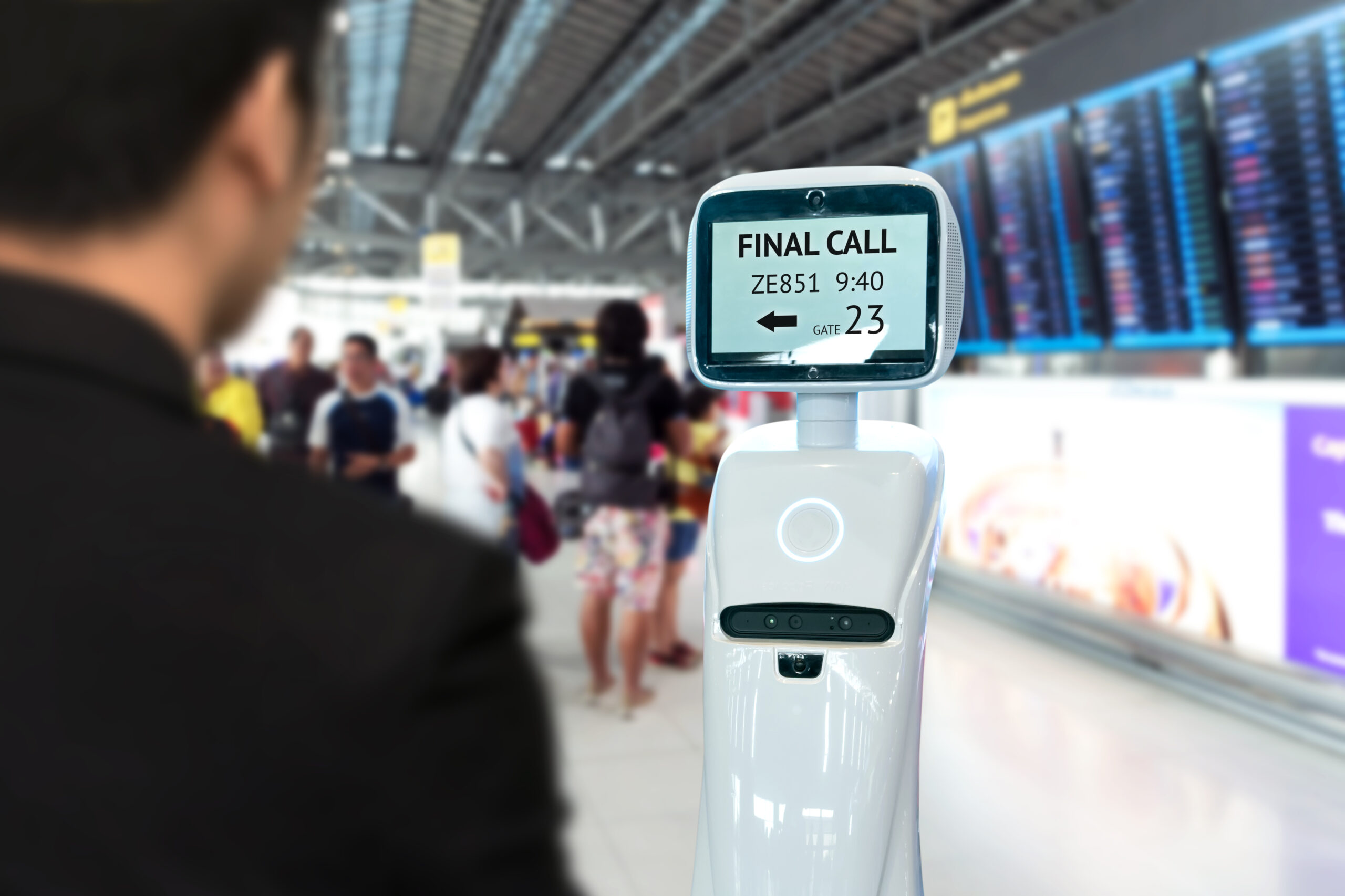
Then there are the mobile apps that have become part of our daily lives. At the airport, these are being paired with “assistance robots” to provide real-time updates on check-in counters and boarding gates, security wait times, and even the latest deals in duty-free shops.
Another traditional pain point for passengers is luggage. Here, too, technology is stepping in. Beyond the info provided by airport apps, new “smart tags” allow you to geolocate and track your suitcases in real-time, helping to prevent loss or misdirection. This is further supported by the heavy robotisation of transfer chains between aircraft and terminals.
While these innovations are designed to help the passenger, they are also—perhaps primarily—there to streamline operations for the airports themselves. This includes monitoring the health of infrastructure like lifts, escalators, and air conditioning to predict and prevent breakdowns. Smart lighting and heating systems are also used to adjust automatically based on footfall in different terminals.
On a level that benefits everyone, intelligent cameras can now manage passenger flow by detecting crowded zones in real-time, prompting the airport to open new counters or reassign staff as needed.
In short, it’s a win-win for airports, airlines, and the travelling public alike.
It’s no surprise, then, that smart airports are on the rise. While only about thirty are currently “fully” equipped—including Dubai, Singapore, Doha, Seoul, Tokyo-Haneda, and Paris-Charles de Gaulle—many others are transitioning rapidly. It is estimated that by the end of the decade, every major international hub will have adopted this model. Welcome to the airport of the 21st century.

Hello! I’m Ben Fischer, a travel enthusiast who has journeyed far and wide to bring you unique and inspiring stories. Each destination is a new adventure for me, a chance to explore diverse cultures and share unforgettable experiences.
In my articles, I take you beyond mere descriptions of places. I share the encounters, special moments, and anecdotes that make each trip unique. My writing is an invitation to see the world through my eyes, blending practical tips with personal insights.
As a lifelong traveler, I approach each journey with respect and curiosity, eager to uncover the stories hidden in every corner of the globe.
