
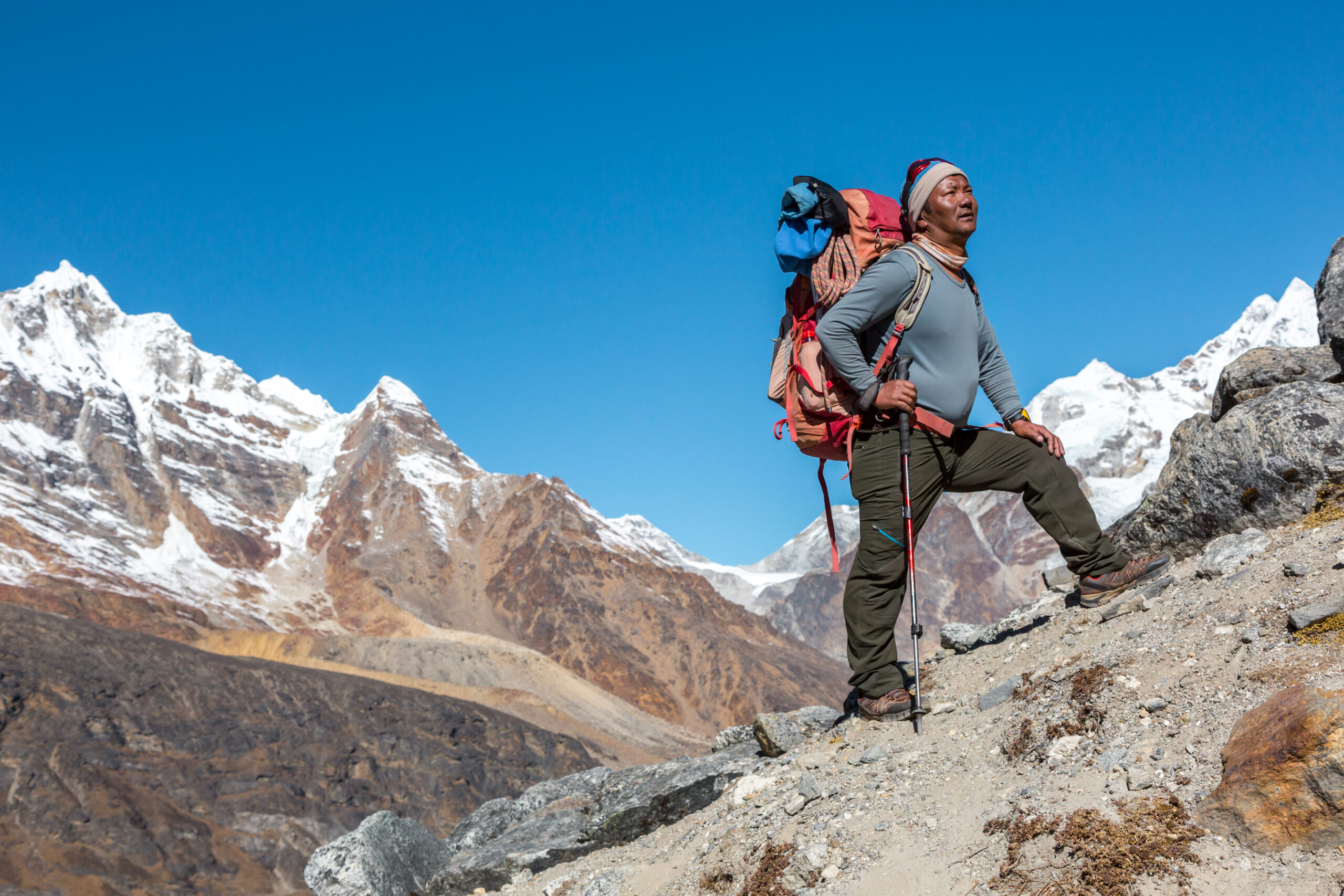
It’s true that this news only affects a select few—those daring enough to tackle Mount Everest. However, it signals a clear commitment from the Nepalese authorities to better protect the Himalayan range. To that end, the rules for scaling the “Roof of the World” are set for a major overhaul in 2027.
Fewer crowds, higher costs, and better environmental protection
These three pillars summarise Nepal’s strategy to refine and accelerate measures introduced in recent years.
Permit numbers have already been reduced, and prices have skyrocketed. For foreign mountaineers, a permit now costs $15,000 per person during the peak spring season (March to May). This price halves for the autumn window (September to November) and drops to $3,750 for the rest of the year. These hikes have officially made Everest the most expensive peak in the world to climb.
Despite sitting at 8,849 metres, the world’s highest peak sees a steady stream of expeditions. While climbers visit throughout the year, the “prime” windows remain March–May and September–December. This popularity has led to dangerous bottlenecks near the summit, posing significant risks at such extreme altitudes. Furthermore, parts of the mountain are increasingly being described as an open-air rubbish dump, leading to severe environmental degradation. This is precisely why a new set of measures is being planned for 2027.
New requirements for 2027
By this date, every expedition will be required to be accompanied by accredited local guides. More importantly—to deter inexperienced amateurs from attempting the feat—climbers will have to prove they have already summited a peak of over 7,000 metres within Nepal. They will also need to provide a recent medical certificate and a detailed ascent plan.
Reports also suggest that new legislation will require every climber to bring back at least 8kg of waste—roughly the amount an individual produces during an ascent. To ensure compliance, a security deposit of approximately $4,000 per person may be required, which the authorities will retain if the rules aren’t met. It’s a firm stance, but one that is arguably long overdue.

Hello! I’m Ben Fischer, a travel enthusiast who has journeyed far and wide to bring you unique and inspiring stories. Each destination is a new adventure for me, a chance to explore diverse cultures and share unforgettable experiences.
In my articles, I take you beyond mere descriptions of places. I share the encounters, special moments, and anecdotes that make each trip unique. My writing is an invitation to see the world through my eyes, blending practical tips with personal insights.
As a lifelong traveler, I approach each journey with respect and curiosity, eager to uncover the stories hidden in every corner of the globe.
