
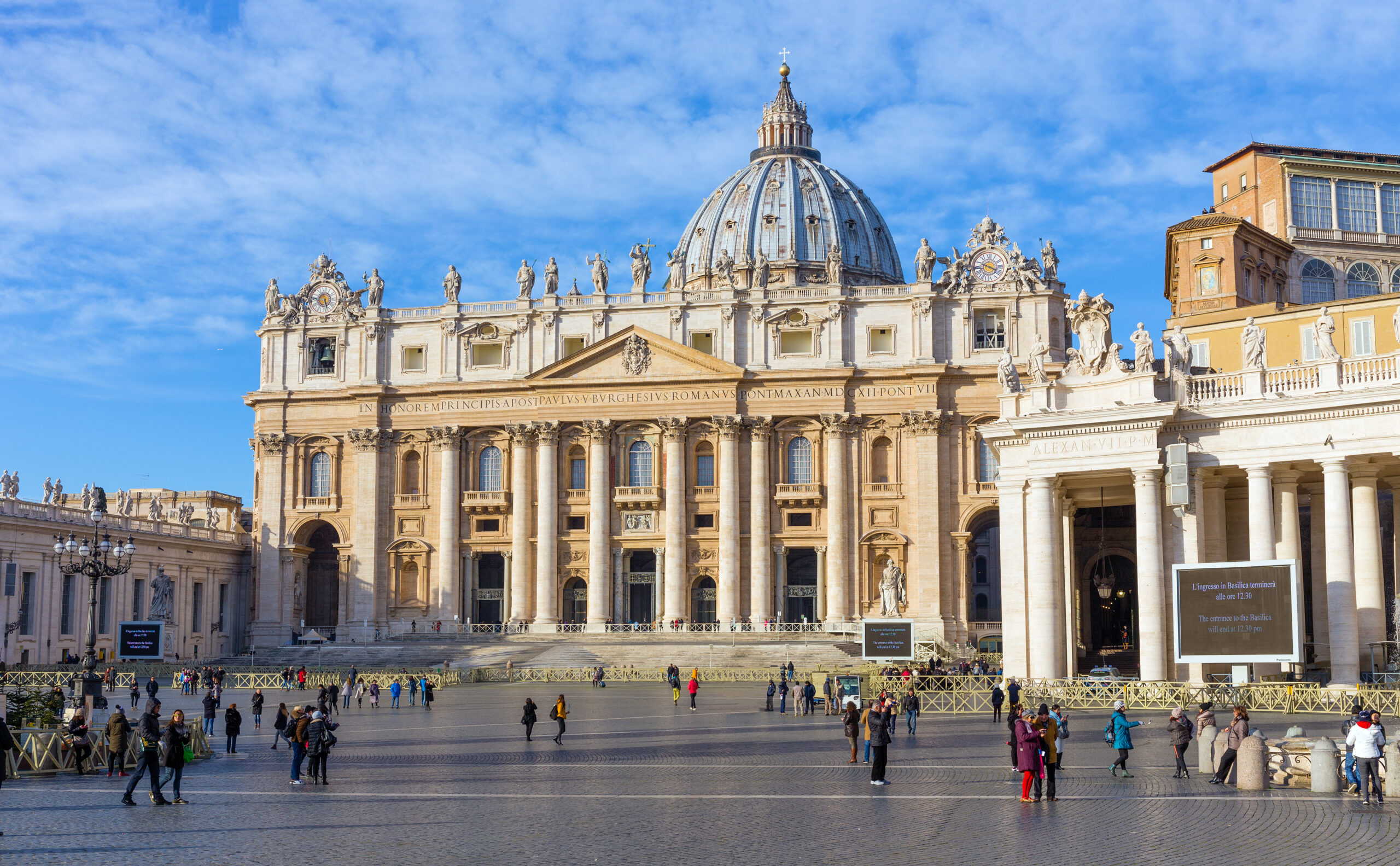
It is Rome, yet not quite. The Vatican, home to the iconic St. Peter’s Basilica, is set to undergo a series of updates this year to mark a significant milestone in its history.
Four Centuries of History
To celebrate its 400th anniversary, St. Peter’s Basilica is embracing the modern era. Visitors can look forward to a blend of technological innovations and the opening of brand-new spaces.
One of the most anticipated changes is the opening of full public access to the roof terrace. This will feature a new permanent exhibition detailing the building’s history, alongside a dedicated “rooftop café”—a welcome addition for those looking to take in the view. These improvements are partly a response to the site’s immense popularity, with an average of 20,000 people passing through its doors every day.
To manage these crowds and improve the visitor experience, a new online booking system called “SmartPass” is being introduced. This will allow visitors to secure a specific time slot, coupled with a fast-track entry system and a digital audio guide. While entry to the Basilica itself remains free, the SmartPass is expected to cost around €7.
The Vatican is also leaning into high-tech solutions by incorporating Artificial Intelligence. A new system will allow worshippers to follow masses and ceremonies in some sixty languages, with instant translations delivered directly to their smartphones via a QR code. Furthermore, a new immersive experience will be launched to tell the story of St. Peter, the apostle after whom the Basilica is named and who is buried on-site.
The anniversary celebrations will continue throughout the year with a programme of sacred music concerts, historical exhibitions on the Basilica’s construction, and various liturgical events. The festivities will culminate in November, marking the anniversary of the building’s original consecration on 18 November 1626.
Why is the Vatican a Sovereign State?
It is a question often asked: how can a territory as tiny as the Vatican, whose primary purpose is religious, hold the same status as any other recognised nation? The Vatican occupies a unique position unlike anywhere else on Earth. Entirely landlocked within the city of Rome, it serves as the seat of the Papacy and the Roman Catholic Church. It is officially the smallest country in the world (covering just 0.44 km²) and the least populated, with only 764 inhabitants.
Its modern existence dates back to 1929 and the signing of the Lateran Treaty. However, the Papacy’s presence in Rome goes back much further; from the 4th century onwards, the Church governed a significant portion of the Italian peninsula known as the Papal States. These territories were eventually annexed by the Kingdom of Italy in 1870, a move that deeply frustrated the Papacy. At the time, the Popes considered themselves “prisoners in the Vatican,” stripped of their authority by the Italian government.
To resolve this long-standing dispute, the Lateran Treaty was eventually signed between the Kingdom of Italy and the Holy See. This agreement established the Vatican City as an independent state with recognised borders. This status ensures the Church can exercise its spiritual authority and global religious mission without being subject to the sovereignty of another nation. Thus, the State of the Vatican City was born.

Hello! I’m Ben Fischer, a travel enthusiast who has journeyed far and wide to bring you unique and inspiring stories. Each destination is a new adventure for me, a chance to explore diverse cultures and share unforgettable experiences.
In my articles, I take you beyond mere descriptions of places. I share the encounters, special moments, and anecdotes that make each trip unique. My writing is an invitation to see the world through my eyes, blending practical tips with personal insights.
As a lifelong traveler, I approach each journey with respect and curiosity, eager to uncover the stories hidden in every corner of the globe.
