
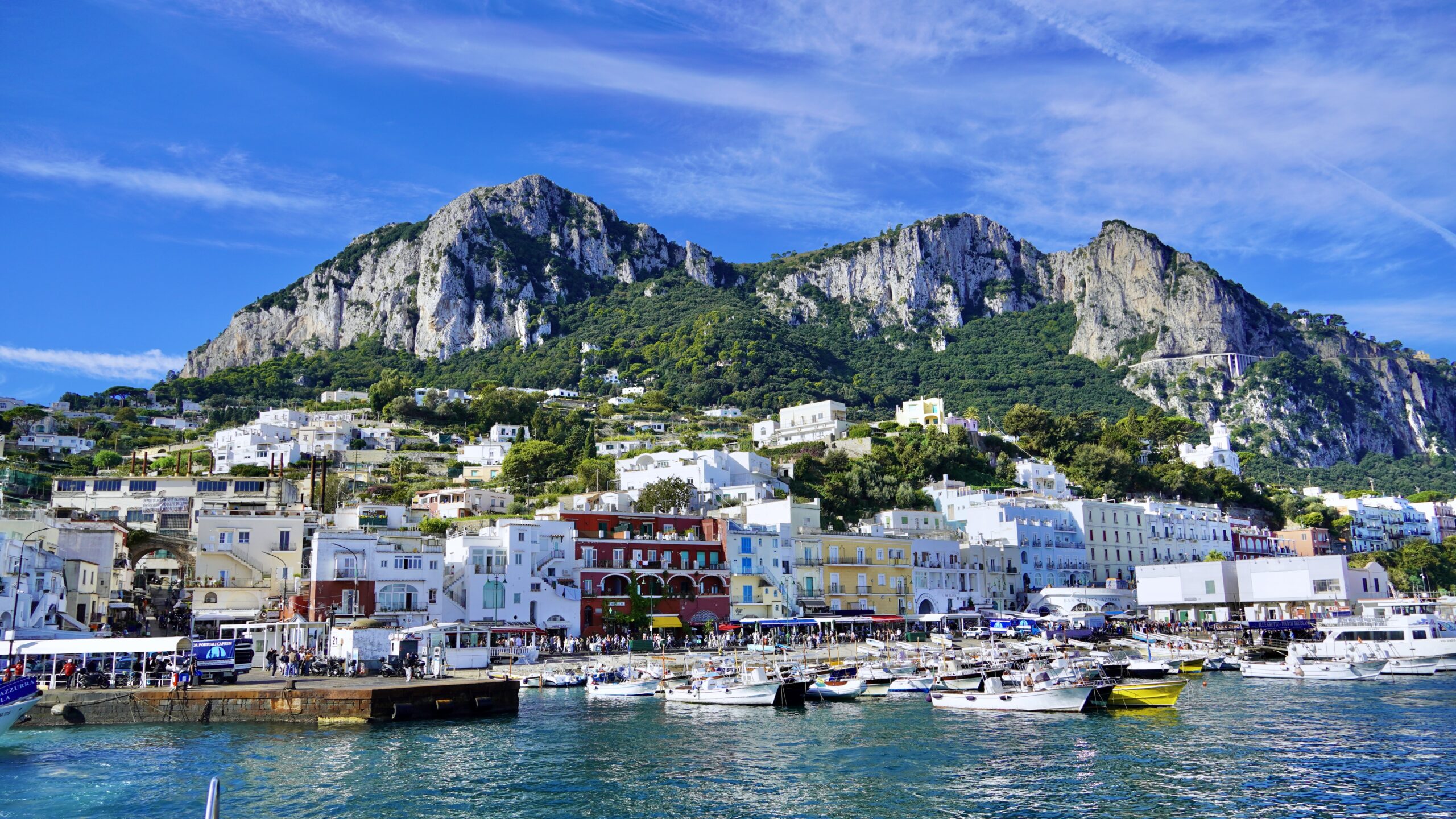
If there is one island in the Bay of Naples world-renowned for its beauty and the dolce vita, it is undoubtedly Capri. As you might expect, visitor numbers skyrocket during peak season—to the point where local authorities have (finally) decided that, starting this year, it’s time for some ground rules.
Managing the Crowds
It’s official: from next summer, organised groups of more than 40 people will be banned from Capri. The move is designed to better manage the influx of tourists, which on certain days sees over 50,000 visitors descending upon an island of barely 10 $km^2$ with just 13,000 residents.
While the impact of this measure might seem modest, many islanders highlight it as a step in the right direction. It may well be a precursor to a mandatory visitor cap, similar to those already introduced on the island of Bréhat in Brittany or other over-touristed sites worldwide, aimed at drastically reducing footfall. For now, however, such a drastic limit hasn’t quite arrived.
In addition to downsizing groups, another symbolic—yet practical—measure has been introduced: guides leading groups of more than 20 people must now use wireless headsets instead of loudspeakers to address their clients.
Why Is Capri So Popular?
Capri’s appeal is nothing new. Even in antiquity, it was a sought-after retreat, a fact still evidenced today by the ruins of several imposing Roman villas. It is no surprise, then, that this allure continued to grow, reaching its zenith in the 19th and 20th centuries. During this era, the Roman aristocracy would flee the capital’s stifling summer heat for the island’s sea breezes, joined by a glittering array of figures from the worlds of art, literature, and politics.
By the 1950s and 60s, the “jet set” and the world of showbiz had firmly claimed the island as their own. From Richard Burton and Elizabeth Taylor to Grace Kelly, the Duchess of Windsor, and the Kennedy and Onassis families, this non-stop parade of A-listers cemented Capri’s legendary status—eventually rivalling even Saint-Tropez as the place to be seen.

Hello! I’m Ben Fischer, a travel enthusiast who has journeyed far and wide to bring you unique and inspiring stories. Each destination is a new adventure for me, a chance to explore diverse cultures and share unforgettable experiences.
In my articles, I take you beyond mere descriptions of places. I share the encounters, special moments, and anecdotes that make each trip unique. My writing is an invitation to see the world through my eyes, blending practical tips with personal insights.
As a lifelong traveler, I approach each journey with respect and curiosity, eager to uncover the stories hidden in every corner of the globe.
