
America > Cuba: Weather, Map, Costs and Travel Guide

Cuba : When and where to go?
Click on a city for complete climate and weather tables


Cuba: Climate & Weather
The subtropical climate divides the year into two major seasons: A wet season from May to October with average temperatures of 30°C in July and August, and a dry season from November to April with temperatures dropping to 20°C in February.
Hotter weather is observed in the east with heavy rainfall at the end of the summer, during September and October, with the possibility of hurricane.
The best time to visit Cuba from a climatic viewpoint: At the end of August could be a good time, the hot weather decreases as well the flow of tourists!
Weather today

Light Rain
max. 31 °C
min. 23 °C
Wind: 8 km/h
Precipitation forecast: 2 mm
> Full report and 7-days forecast
Data updated at 06:32 (local time)
At that time, the weather was:
 23 °C / Overcast
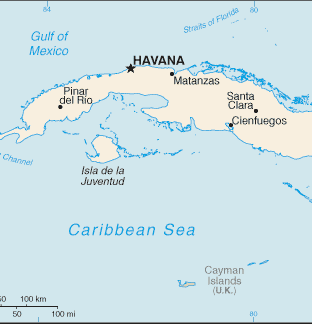
Cuba: Map
Sponsored links
What to do in Cuba
The Cuban revolution has made Cuba famous, but it has other aces up its sleeve to make it known: Its music and its beaches and forests, mixed architecture, smiling people, these are some examples that make it an enchanting destination.
Havana combines the history and the modernity: It is authentic and beautiful but also has some poverty-stricken areas which can’t be ignored. Its fortifications are registered on the UNESCO's world heritage list, but you can also admire the City Museum, the cathedral, the Palace of Captains-Generals, the Cuban Art Museum, Che Guevara Museum, and many other sites, later take a stroll along the Malecon that surrounds the coast, it boasts beautiful colonial buildings.
Trinidad is itself a museum: The Plaza Mayor, Municipal Historic museum, but there are also many places within the country awaiting your visit. The beautiful beaches extend everywhere.
The Pinar del Rio province in the west is full of surprises for fans of fishing, hiking, swimming and bird watchers.
For diving enthusiasts and nature lovers, the Island of Youth is a natural, unspoilt, peaceful area that it would be a shame not to explore.
Havana combines the history and the modernity: It is authentic and beautiful but also has some poverty-stricken areas which can’t be ignored. Its fortifications are registered on the UNESCO's world heritage list, but you can also admire the City Museum, the cathedral, the Palace of Captains-Generals, the Cuban Art Museum, Che Guevara Museum, and many other sites, later take a stroll along the Malecon that surrounds the coast, it boasts beautiful colonial buildings.
Trinidad is itself a museum: The Plaza Mayor, Municipal Historic museum, but there are also many places within the country awaiting your visit. The beautiful beaches extend everywhere.
The Pinar del Rio province in the west is full of surprises for fans of fishing, hiking, swimming and bird watchers.
For diving enthusiasts and nature lovers, the Island of Youth is a natural, unspoilt, peaceful area that it would be a shame not to explore.
Cuba: The basics
There are several airlines with flights to Cuba from Europe.
A tourist card is required to stay for less than 30 days, except for business trips which require a visa.
Two currencies are in circulation: The Cuban peso and the Cuban convertible peso, this one is used by tourists.
The budget required is highly expensive for foreigners compared to other Latin American countries: A double room will cost about €40 and an average meal about €10.
There are no particular health issues in the region: However take usual precautions, protect yourself from the sun, against mosquitoes, do not drink tap water, and it is always advisable to keep all classic vaccines up to date and also those against typhoid and hepatitis A.
To travel within the country, domestic flights are available, but buses are also a means of transportation very convenient and efficient. Renting a car is an easy way to travel on the island, but it is quite expensive.
A tourist card is required to stay for less than 30 days, except for business trips which require a visa.
Two currencies are in circulation: The Cuban peso and the Cuban convertible peso, this one is used by tourists.
The budget required is highly expensive for foreigners compared to other Latin American countries: A double room will cost about €40 and an average meal about €10.
There are no particular health issues in the region: However take usual precautions, protect yourself from the sun, against mosquitoes, do not drink tap water, and it is always advisable to keep all classic vaccines up to date and also those against typhoid and hepatitis A.
To travel within the country, domestic flights are available, but buses are also a means of transportation very convenient and efficient. Renting a car is an easy way to travel on the island, but it is quite expensive.


