
Europe > Bulgaria: Weather, Map, Costs and Travel Guide

Bulgaria : When and where to go?
Click on a city for complete climate and weather tables


Bulgaria: Climate & Weather
A mountainous country, Bulgaria has a generally continental climate with some Mediterranean influences from the Aegean Sea.
Spring is fairly mild and summer is hot and dry with refreshing storms whilst winters are quite harsh with frequent snowfall up to spring.
The best time to visit Bulgaria is therefore between May and September so you can benefit from lots of sunshine and warm temperatures.
Skiing fans will want to practise their skills on the slopes between December and April.
Weather today

Clear
max. 27 °C
min. 15 °C
Wind: 4 km/h
Precipitation forecast: 0 mm
> Full report and 7-days forecast
Data updated at 13:18 (local time)
At that time, the weather was:
26 °C / Clear
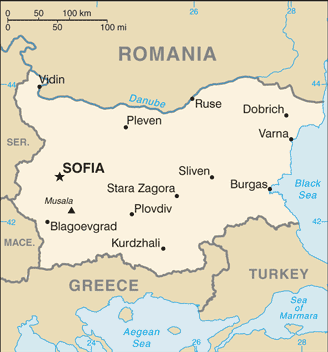
Bulgaria: Map
Sponsored links
What to do in Bulgaria
For a fairly small country, Bulgaria does offer a lot of advantages: Varied landscapes, superb archaeological treasures following the passage of its various civilisations, its ideal geographical position and hospitable population are amongst the best of them.
Sofia, its Capital shows two faces: First, charming and interesting with its old town centre, the cathedral, the National History Museum and the bars that open till late at night; and the second side, utilitarian and dowdy with its outskirts marked by austere Stalinist style buildings. Do not miss the cable car ride to the top of Mount Vitosha for a panoramic view over the city.
The other main city, Veliko Tarnovo, is divided into two by the river Yantra. You can discover the ruins of the old Royal castle, Tsarevets, the Church of the Assumption and the magnificent traditional style houses in the Old Town.
Nature lovers will probably wish to head for the mountains around Rila to enjoy some hiking, the Monastery at Rila is often the desired objective with its beautiful church decorated with over a thousand frescoes.
Finally on the banks of the Black sea, the town of Nesebar is famous for its 40 churches dating from the 5th Century and its picturesque position on a rocky peninsula.
Sofia, its Capital shows two faces: First, charming and interesting with its old town centre, the cathedral, the National History Museum and the bars that open till late at night; and the second side, utilitarian and dowdy with its outskirts marked by austere Stalinist style buildings. Do not miss the cable car ride to the top of Mount Vitosha for a panoramic view over the city.
The other main city, Veliko Tarnovo, is divided into two by the river Yantra. You can discover the ruins of the old Royal castle, Tsarevets, the Church of the Assumption and the magnificent traditional style houses in the Old Town.
Nature lovers will probably wish to head for the mountains around Rila to enjoy some hiking, the Monastery at Rila is often the desired objective with its beautiful church decorated with over a thousand frescoes.
Finally on the banks of the Black sea, the town of Nesebar is famous for its 40 churches dating from the 5th Century and its picturesque position on a rocky peninsula.
Bulgaria: The basics
Various European Capitals are linked to Sofia by air although the train is also an easy way to get to Bulgaria from various European countries.
A visa is not required for European citizens.
The currency in circulation is the lev.
The budget required for lodging and meals is fairly moderate: Less than €15 for a good meal and around €30 for a hotel room.
Amongst other things, buses and taxis also cost very little.
Concerning health precautions, you should check that all your vaccinations are up to date and get a hepatitis A vaccination too. Purify drinking water if you are not in town. There are three areas you need to be aware of: Stray dogs in towns may be carriers of rabies, ticks in the countryside can transmit encephalitis (a vaccination exists for this) and watch out for the mosquitoes.
When travelling internally, buses and trains are frequent and cheap although the timetables are not very strictly kept to.
A visa is not required for European citizens.
The currency in circulation is the lev.
The budget required for lodging and meals is fairly moderate: Less than €15 for a good meal and around €30 for a hotel room.
Amongst other things, buses and taxis also cost very little.
Concerning health precautions, you should check that all your vaccinations are up to date and get a hepatitis A vaccination too. Purify drinking water if you are not in town. There are three areas you need to be aware of: Stray dogs in towns may be carriers of rabies, ticks in the countryside can transmit encephalitis (a vaccination exists for this) and watch out for the mosquitoes.
When travelling internally, buses and trains are frequent and cheap although the timetables are not very strictly kept to.


