
America > Bolivia: Weather, Map, Costs and Travel Guide

Bolivia : When and where to go?
Click on a city for complete climate and weather tables
| Town | Jan | Feb | Mar | Apr | May | June | July | Aug | Sept | Oct | Nov | Dec |
| La Paz |  | | |  |  | | | | | | | |
Bolivia: Climate & Weather
The climate is variable according to the geographical zone: In the Altiplano, the high altitude creates very cold temperatures at night during the dry season between May and October but it is fairly warm during the daytime.
The plains to the East experience very high temperatures during the wet season between November and March. Sudden flash floods can affect all areas at times during the wet season.
The best time to travel is during the dry season but depending on the individual areas you can visit Bolivia throughout the year.
Weather today

Light Rain
max. 8 °C
min. 3 °C
Wind: 9 km/h
Precipitation forecast: 0,1 mm
> Full report and 7-days forecast
Data updated at 10:14 (local time)
At that time, the weather was:
 6 °C / Overcast
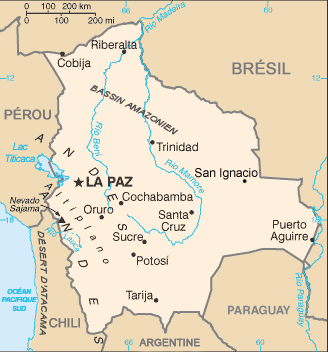
Bolivia: Map
Sponsored links
What to do in Bolivia
Between legendary landscapes and fascinating civilisations, Bolivia has a place of its own in the imagination of travellers.
La Paz, the highest Capital of the world, will immediately plunge the visitor into another universe: Its inhabitants, dressed in their multicoloured clothing, the magnificent monuments such as the San Francisco church, the various museums, its witches market will all leave you amazed and astounded. A few miles away, you can discover the canyons of the Valle de la Lune, blue-green lakes in the Valley of Zongo and the pre-Colombian archaeological site of Tiahuanaco.
Cochabamba makes a relaxing stop thanks to its agreeable climate and peaceful position in the valleys; this is the place to visit the cathedral, the archaeological museum and the Convent of Saint Teresa.
Lake Titicaca is almost an obligatory stop on your route: Its 36 islands and deep blue water, the traces of the Inca culture and the town of Copacabana with its pure white cathedral, the reed boats of Isla Suriqui, the funeral towers of Isla Kalahuta make this a place of many fascinating and wonderful discoveries.
Tupiza will transport you into a Wild West setting where you can admire the surrounding desert scenery with its red rocks and cactus, sharp cliffs with clear rivers lapping at their bases and the villages of red ochre earth.
Bolivia: The basics
It is more economical to get to Bolivia by road through a neighbouring country to which you can fly (Argentina or Peru).
European citizens do not need a visa if they stay for less than 30 days.
The currency in circulation is the Boliviano.
The budget you will need to plan for is fairly moderate: A double room will cost around €20 in a reasonable hotel and a hearty meal will cost you less than €5.
Health precautions to take are those of a country under development: Do not drink tap water or use ice, no milk and no raw salads. Monitor for diarrhoea which could be a sign of cholera infection. Be aware of altitude sickness (soroche) and malaria under 1,800m and in the Amazon (slope). Your vaccinations should be up to date and include those for yellow fever, typhoid and hepatitis A.
In the interests of your security, it is advisable to consult the website for the Ministry for Foreign Affairs before your departure.
Travel within the country can be undertaken by plane but these are often late with frequent cancelations. There is a rail service but the trains are often slow. Getting a ride on a lorry can be a useful solution, often employed by the locals.
European citizens do not need a visa if they stay for less than 30 days.
The currency in circulation is the Boliviano.
The budget you will need to plan for is fairly moderate: A double room will cost around €20 in a reasonable hotel and a hearty meal will cost you less than €5.
Health precautions to take are those of a country under development: Do not drink tap water or use ice, no milk and no raw salads. Monitor for diarrhoea which could be a sign of cholera infection. Be aware of altitude sickness (soroche) and malaria under 1,800m and in the Amazon (slope). Your vaccinations should be up to date and include those for yellow fever, typhoid and hepatitis A.
In the interests of your security, it is advisable to consult the website for the Ministry for Foreign Affairs before your departure.
Travel within the country can be undertaken by plane but these are often late with frequent cancelations. There is a rail service but the trains are often slow. Getting a ride on a lorry can be a useful solution, often employed by the locals.


