
Africa > Mali: Weather, Map, Costs and Travel Guide

Warning: high risk destination.
Mali : When and where to go?
Click on a city for complete climate and weather tables
| Town | Jan | Feb | Mar | Apr | May | June | July | Aug | Sept | Oct | Nov | Dec |
| Bamako |  |  | |  | | | | | | | |  |
Mali: Climate & Weather
Mali’s climate is characterised by high temperatures throughout the year, especially in the north where rain is either absent or very rare. The temperature in Timbuktu can reach up to 50°C.
There is however a wet season in the south between June and September. Nights in particular can be relatively cool in certain areas (13°C in January in Gao). When planning your visit to Mali you are better choosing the period from October to February, preferably November. Try to avoid the dry season from March to May.
Weather today

Light Rain
max. 39 °C
min. 28 °C
Wind: 5 km/h
Precipitation forecast: 3,4 mm
> Full report and 7-days forecast
Data updated at 02:23 (local time)
At that time, the weather was:
 28 °C / Partly Cloudy
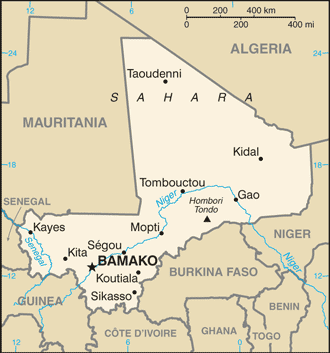
Mali: Map
Sponsored links
What to do in Mali
Although Mali may be one of the poorest countries in the world, the beauty of its land and the kindness of its people make it a popular destination.
The capital, Bamoko, hums with life and music; visit the market where you can find just about anything you could wish for, also the crafts centre, the antiques village and the National Museum with its many treasures.
Timbuktu, very different from the other towns along the Niger, has a mysterious and subtle charm, lost in the desert and invaded little by little by the sands.
Djenné, in the Niger delta, becomes an island during the rainy season. You will admire its houses made of earth with their ornately decorated doorways and the slanted mosque in the desert.
A particular ‘must see’ place is the Dogon country which has a unique culture. The houses of pink sandstone, the mask festival in April and the market are some of the marvels you can discover all along the cliffs at Bandiagara spread along 130 kilometres.
Take the time to take a boat trip along the Niger to discover the towns along its banks. San with its otherworldly calm, Mopti and its multicoloured market, Gao with its mosque and the unforgettable landscapes you will see along the "river of rivers".
The capital, Bamoko, hums with life and music; visit the market where you can find just about anything you could wish for, also the crafts centre, the antiques village and the National Museum with its many treasures.
Timbuktu, very different from the other towns along the Niger, has a mysterious and subtle charm, lost in the desert and invaded little by little by the sands.
Djenné, in the Niger delta, becomes an island during the rainy season. You will admire its houses made of earth with their ornately decorated doorways and the slanted mosque in the desert.
A particular ‘must see’ place is the Dogon country which has a unique culture. The houses of pink sandstone, the mask festival in April and the market are some of the marvels you can discover all along the cliffs at Bandiagara spread along 130 kilometres.
Take the time to take a boat trip along the Niger to discover the towns along its banks. San with its otherworldly calm, Mopti and its multicoloured market, Gao with its mosque and the unforgettable landscapes you will see along the "river of rivers".
Mali: The basics
Bamako airport is well served by various airlines.
A visa is required to enter the country.
The currency in circulation is the West African CFA franc.
The budget required is fairly modest, even including the tourist tax: A double room, without breakfast, will cost around €20 and a reasonable, often delicious, meal less than €10 from small hotels, even less if you try the food from the local street stalls.
It is recommended that you check medical requirements for tropical destinations before you leave. A vaccination against yellow fever is obligatory and those for typhoid and hepatitis A and B are highly recommended. Prepare a good first aid kit and take normal precautions during your visit; do not drink tap water, avoid dairy products, wash your hands well before meals and do not bathe in stagnant water.
For internal transport buses are a good choice being both inexpensive and regular.
At present it is highly recommended that you avoid the area north of the Niger River where there are ongoing hostilities.
A visa is required to enter the country.
The currency in circulation is the West African CFA franc.
The budget required is fairly modest, even including the tourist tax: A double room, without breakfast, will cost around €20 and a reasonable, often delicious, meal less than €10 from small hotels, even less if you try the food from the local street stalls.
It is recommended that you check medical requirements for tropical destinations before you leave. A vaccination against yellow fever is obligatory and those for typhoid and hepatitis A and B are highly recommended. Prepare a good first aid kit and take normal precautions during your visit; do not drink tap water, avoid dairy products, wash your hands well before meals and do not bathe in stagnant water.
For internal transport buses are a good choice being both inexpensive and regular.
At present it is highly recommended that you avoid the area north of the Niger River where there are ongoing hostilities.


